Dunkers, Drizzlers and Dousers: The Great Peri-Peri Sauce Etiquette Debate
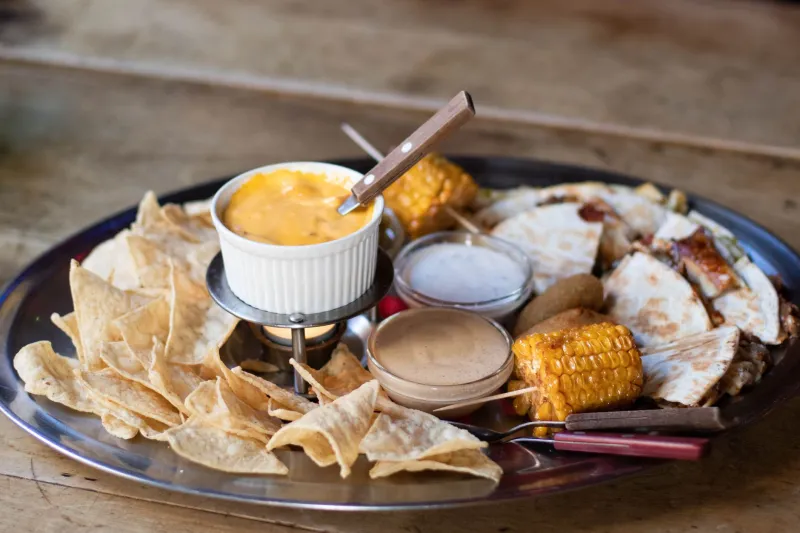
Order at any peri-peri counter for long enough and you start to notice something. Nobody is casual about the sauce. People who will happily say "whatever's easiest" about a drink, a side or a seat in a restaurant will suddenly develop firm, detailed and slightly emotional opinions about exactly how much sauce goes where, and in what order.
This is not indecision. This is ritual. And it deserves to be taken seriously.
The polite neutrality problem
British ordering culture has a flaw: we are taught not to make a fuss. So we say "medium's fine" when we mean "hot", and "a little bit of sauce" when we mean "a lake". Then the food arrives under-sauced and we sit there quietly disappointed, unable to name the problem.
Peri-peri doesn't really allow for that. The whole point of a heat scale is that it's your call. Medium isn't the default setting of the universe — it's just the one that's easiest to say out loud.
So in the interests of clarity, here's the field guide.
The field guide: five kinds of sauce person
The Dunker
Order comes, sauce pot opened, chip goes in vertically, straight to the bottom, comes out orange to the knuckle. The Dunker is methodical and slightly territorial. They will move the pot away from the middle of the table so nobody "accidentally" finishes it. They are also the person most likely to run out with half a plate of chips left, which is a known tragedy in this country.
Dunkers don't want sauce on the food. They want it next to the food, so they can control the ratio bite by bite. It's a reasonable position, honestly.
The Drizzler
Lid off, pot tipped, thin ribbon of sauce drawn across the whole plate in a motion somewhere between art and engineering. The Drizzler believes in coverage. Ideally every chip gets a stripe. They will absolutely do this over a sharing platter in front of guests, and if somebody has a nut-style allergy to heat, the Drizzler will find out about it roughly fifteen seconds too late.
The Douser
No restraint, no geometry, just a determined pour and a plate that ends up with a shallow end. The Douser is at peace with their choices. They will tell you the sauce is "basically a marinade anyway" while the chips slowly lose their ability to stand up. We respect the commitment, not the logistics.
The Hoarder
The Hoarder collects. Two pots with the chicken, one for later, one for the fridge, one "just in case" in the bag. There is a decent chance the Hoarder's kitchen contains a small graveyard of peri-peri pots with a centimetre left in the bottom. They're not going to throw them out. They might need them.
The Architect
Mixes. Lemon and herb into garlic mayo. A spoon of extra hot into a much larger pool of medium, whisked with a chip like a tiny edible spoon. The Architect insists this is balancing, not diluting, and gets genuinely annoyed when someone calls it a compromise.
Half the table finds them exhausting. The other half quietly copies them once the plates are cleared.
The chip ratio argument
Here is the question that ends friendships: how much sauce does a chip need?
The Purist says the chip is a delivery mechanism and should be visibly coated — no dry edges, no drowning. The Douser says if you can still identify a chip by touch, you've been too cautious. The realistic answer sits somewhere in the middle and depends entirely on the sauce: extra hot demands restraint because a little goes a long way; lemon and herb is mild enough that you can be generous without consequences.
What isn't up for debate is the refill. Running out of sauce with a third of the chips remaining is an organisational failure, and it's avoidable. Ask for the extra pot at the start. Nobody will think less of you.
Should chicken be sauced at the table?
This is the real argument, and it splits the room cleanly.
Those who want it sauced at the table have a strong case: flame-grilled chicken comes off the grill with char and crisp skin, and pouring wet sauce over it ten minutes before it reaches you turns that crisp into something soft and glossy. Sauce at the table means crunch, control and no sogginess. It also means the first bite is as good as the last, because you can re-sauce as you go.
Those who want it sauced before have an equally strong case: a glaze that's been sitting on the meat has had time to get into the crevices, into the bone, into the places a quick dip can't reach. It's less precise and more flavourful.
Our honest verdict: dry wings and whole chicken want the sauce pot alongside, so you get the crunch and the choice. Fillets, strips and anything boneless take a pre-glaze beautifully, because there's less skin to lose. Order accordingly, then argue about it.
Why a heat scale invites ritual
Because it's the one part of the order nobody can authorise for you. Your mate can't choose your heat level. The person taking the order isn't going to talk you down. It's a small, personal decision made out loud, and people immediately build habits around it — the person who's been "extra hot" for six years and won't back down, the one who orders medium and then douses a quarter of the plate in hot anyway, the one who gets lemon and herb for the kids and quietly regrets losing the option for themselves.
Those rituals are the whole personality of a peri-peri restaurant. A place where everyone gets the same thing is a canteen. A place where everyone at the table is doing something slightly different with their sauce pot is a good night out.
House rules, loosely enforced
- Don't double-dip. It's a sharing table, not a laboratory.
- Ask before pouring over a platter someone else is eating from.
- Two pots is not greedy. Two pots is sensible.
- If you've ordered extra hot on everything and then gone quiet, we know. We've all been there.
- Nobody at this table is required to describe medium as "a bit of a kick".
Dunk, drizzle, douse — just decide, say it clearly, and ask for the extra pot. That's the whole etiquette, really.